
Searching Olmsted County Criminal Dockets
The remote tool for a public Olmsted County criminal docket is Minnesota Court Records Online, or MCRO. It searches Olmsted County records by Name, Case Number, Citation Number, or Attorney. The best entry point is the full case number. That number appears on a court notice, complaint, or sentencing order. A citation number works well for a traffic-linked criminal matter or an ordinance charge. Name searches run tightest when exact. Add a wildcard after two or more characters, or use Sounds Like for odd spellings. Never pair those two options.
Filter by Case Category Criminal and location Olmsted. Before trusting a hit, compare the case title, filing date, venue, and party role against what you already know. MCRO cannot pay a fine, set a hearing, file papers, or produce a certified copy of any Olmsted County court record. The local office that maintains the unified trial-court record is the Olmsted County District Court.
- Accept the MCRO notice and choose the search type for the Olmsted County matter.
- For an Olmsted County name search, select Person, enter the exact name first, set Criminal and Olmsted, and use Find.
- Open the matching Olmsted County result with View Case Details and read its Register of Actions, rather than relying on the results list alone.
- Compare the Olmsted County case type, filing date, party role, hearing entries, and events with the document or notice in hand.
- Use the Olmsted County court counter or a copy request when an official certified record, a public file not shown remotely, or a fuller access route is needed.
Note: A matching name is only a lead. Check the case details and court location before you rely on the result.
Olmsted Criminal Name Search Limits
A pending Olmsted County criminal case may stay hidden in an MCRO name search until a conviction lands. That limit is about how the search works. It is not proof the case is absent. If you hold a current court notice from the county, search by its case number or citation number instead. An attorney search can help in some situations. For a courthouse option, the Minnesota Public Access Courthouse, or MNPAC, opens statewide public case records on site.
Use the strongest identifier. For a time-sensitive Olmsted County criminal setting, compare MCRO with the current court calendar and confirm the event with the criminal scheduling office.
Case Details in an Olmsted County criminal docket can list the case number, title, category, court location, judicial officer, status, and related cases. Parties, events, and hearings may also show. Financial information, an Appear By date, and any case flag can appear too. A record's presence settles nothing about guilt or about a warrant's present status. Court activity in Olmsted County can shift after any search.
Inside an Olmsted County Criminal Docket
The Olmsted County criminal Register of Actions is a chronological index of case activity. It does not promise every filing is online. Its value is separating raw case information from the events that actually record a plea, order, or sentence. The official MCRO case-details handout lays out these public field groups. A searcher can skip any private case narrative.
| Case number | The full Olmsted County case number from a court notice identifies the record for Case Search and Document Search. |
|---|---|
| Case title and type | These distinguish similar names in an Olmsted County case; a Criminal category is not a finding or disposition. |
| Events and documents | The Olmsted County Register of Actions indexes filings and proceedings, while the remotely visible document set can be narrower. |
| Hearings | Olmsted County dates, settings, and assigned judicial officers can appear, but a scheduled event does not establish that it occurred. |
| Disposition and financials | Read the Olmsted County order or event that states an outcome. Amounts and payment activity can change after the search. |
| Warrant flag | An active-warrant flag is a prompt to confirm Olmsted County status through official court or law-enforcement channels. |
According to the MCRO access overview, major and minor criminal documents filed after July 1, 2015 are broadly available remotely under the access rules. Seeing a document listed is not the same as holding a certified copy from the court.
Olmsted Criminal Prosecution Routes
Criminal cases across Olmsted County all land in one District Court record system. The prosecutor varies by offense and location. The Olmsted County Attorney's Criminal Division prosecutes adult felonies plus some gross misdemeanors and misdemeanors, including matters outside Rochester and in contract cities such as Byron, Stewartville, Oronoco, and Eyota. Rochester's City Attorney generally takes local misdemeanors and some gross misdemeanors. Felony prosecution stays with the county no matter the city.
| Offense level | Maximum framework stated by the county | Docket caution |
|---|---|---|
| Petty misdemeanor | Up to a $300 fine | The level does not predict the result in a specific Olmsted County case. |
| Misdemeanor | Up to a $1,000 fine and 90 days jail | Read the filed Olmsted County charge and later disposition separately. |
| Gross misdemeanor | Up to a $3,000 fine and one year jail | The responsible Olmsted County prosecuting office can differ by location and charge. |
| Felony | More than one year prison potential | Olmsted County felony prosecution does not create a separate court docket. |
Rochester criminal-services instructions describe the city prosecution boundary and local arraignment information.
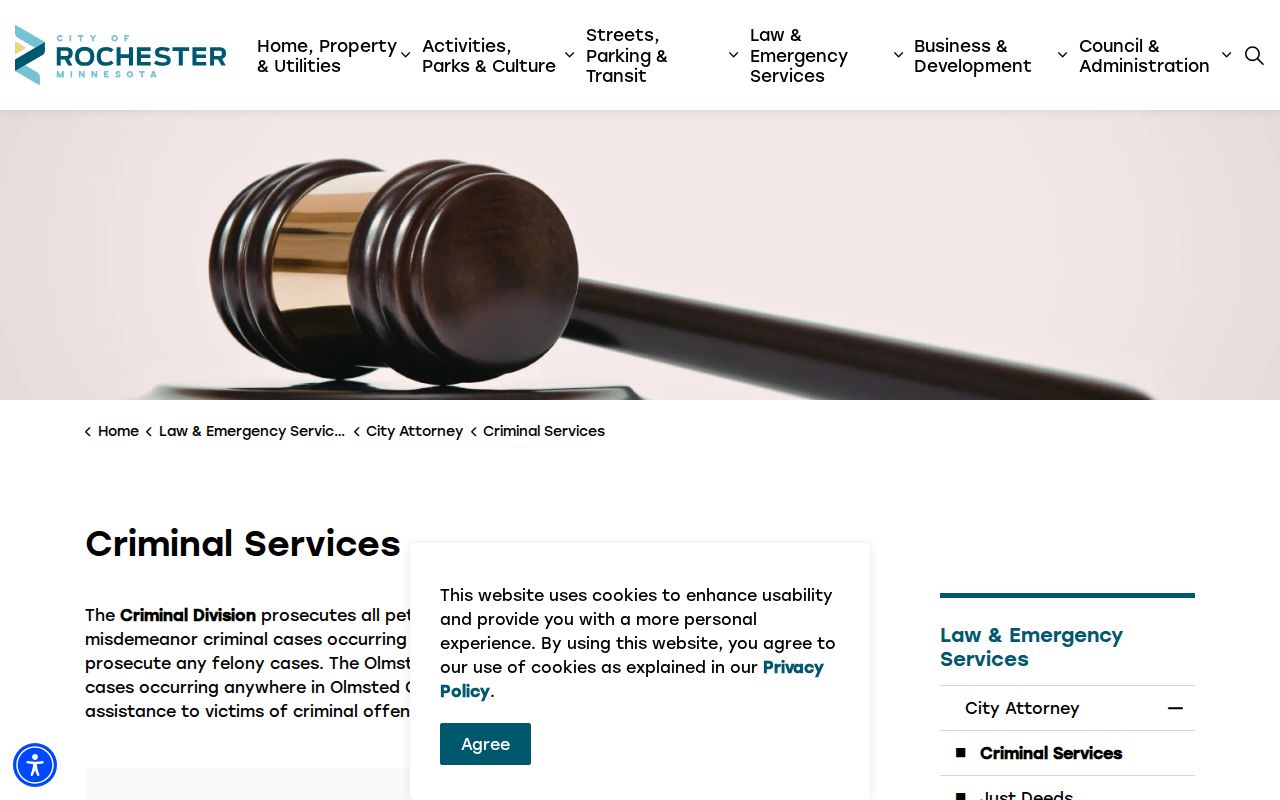
That split changes where procedural questions go. It never changes the court record itself: the Olmsted County criminal Register of Actions remains the docket.
How a Criminal Case Moves
An Olmsted County criminal docket grows entry by entry as the case moves. The first appearance often covers bail or release conditions and a public-defender application for an eligible defendant. An omnibus hearing may take up plea and pretrial issues. Negotiations can surface at a pretrial hearing. A not-guilty plea opens the road to a jury or court trial. Sentencing follows a guilty plea or finding. Every path stays case-specific.
Docket flow: Olmsted County Filing → First Appearance → Omnibus or Pretrial → Plea or Trial → Disposition → Sentencing.
Calendar terms mark a stage, never an outcome. An arraignment is not a conviction. A plea hearing's label alone tells you nothing about the plea entered. An Olmsted County court-trial entry does not state a verdict. The event history and any public order give the real context.
Note: A rescheduled hearing can shift the practical next step. A current record check beats an old calendar copy.
Olmsted Criminal Docket Programs
Olmsted County Treatment Court is a voluntary, post-sentence program blending criminal-justice supervision with treatment. It is not a separate criminal docket database. The county describes a minimum 15-month program built on five phases. Conditions can include assessment, regular court appearances, case management, treatment, testing, support groups, and supervision. Advancing a phase takes treatment-team approval. The policy materials also lay out sanctions for noncompliance. The program's official page documents the phases and the coordinator's role.
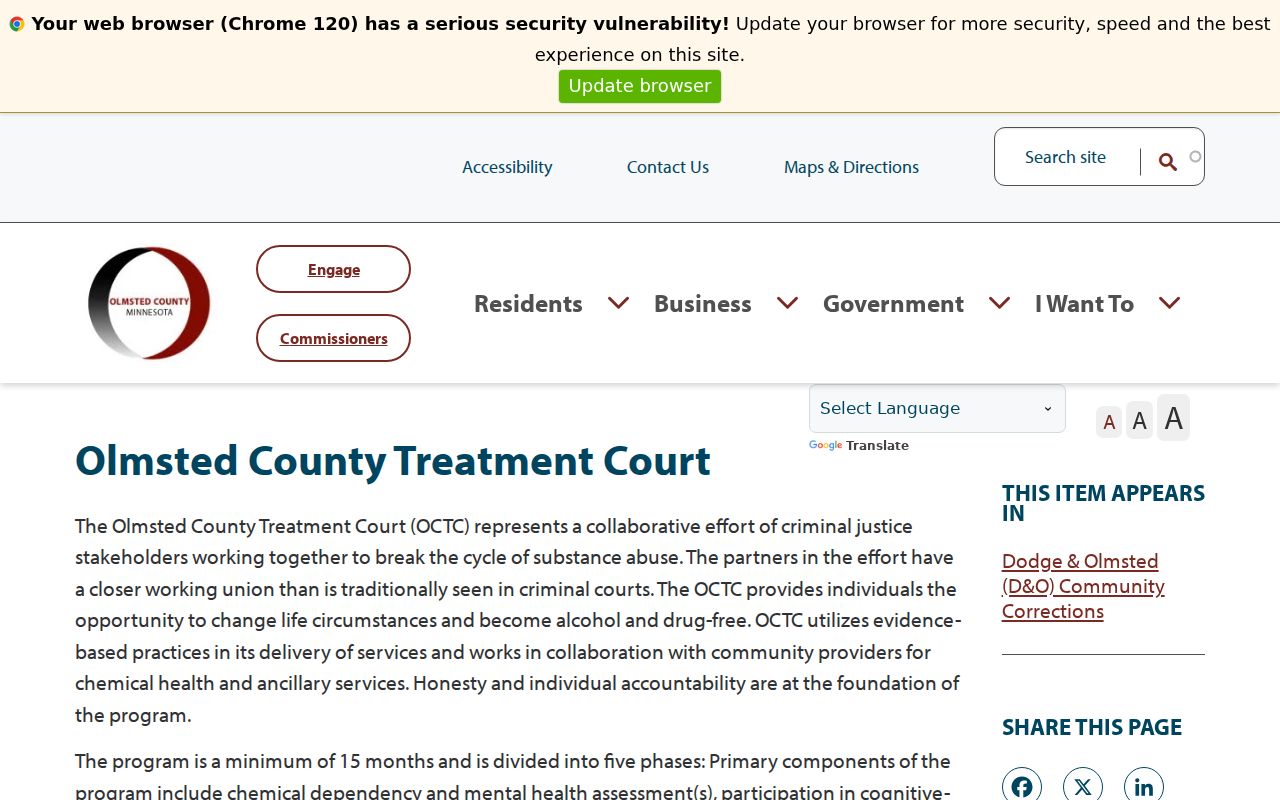
Treatment Court activity in Olmsted County lives inside the underlying criminal case. It changes no court record and erases nothing. The statewide operational treatment-court directory lists Olmsted as a Drug and DWI hybrid court. It also names the regional Veterans Treatment Court. Neither listing opens a separate public case-search portal for a criminal docket.
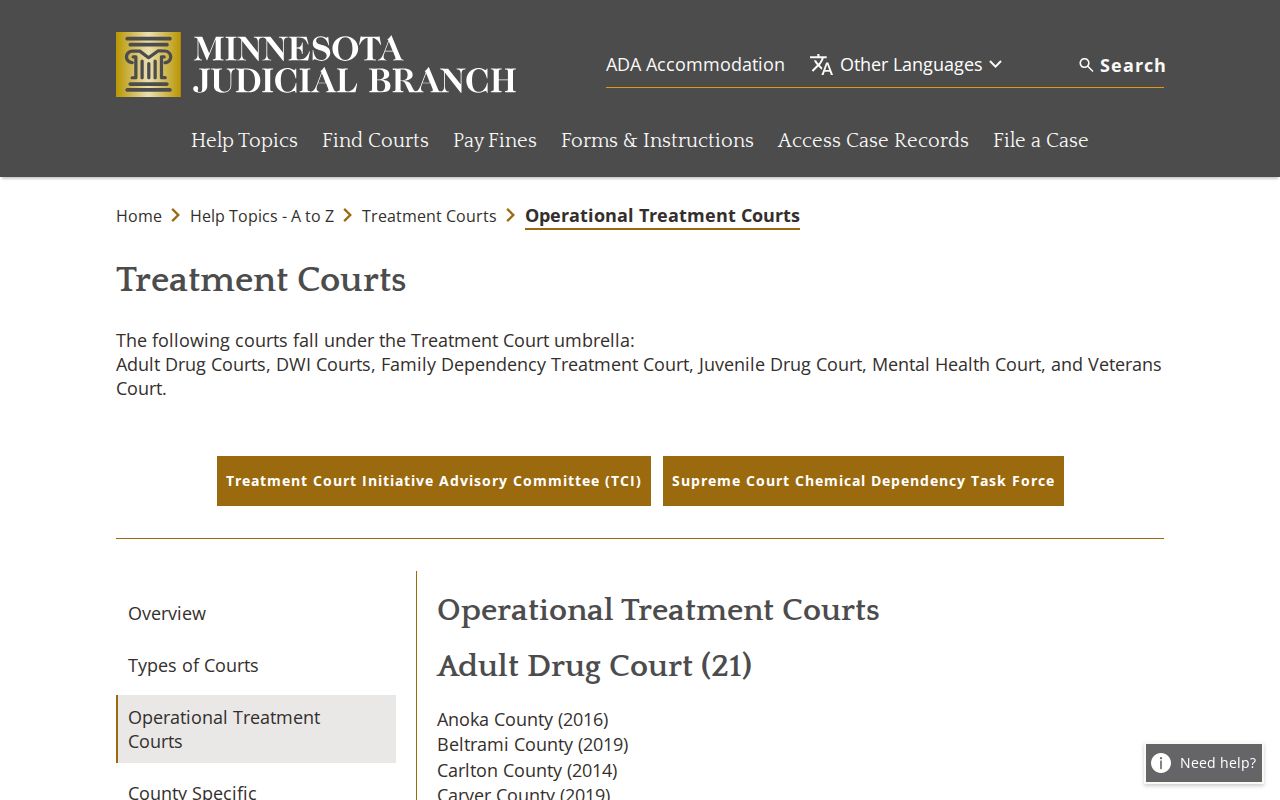
For a public Olmsted County case, MCRO and the court's own record-access channels remain the way to the Register of Actions. The criminal docket itself stays there.
Courts That Hold Criminal Dockets
Olmsted County sits in Minnesota's Third Judicial District. The Olmsted County District Court holds original jurisdiction over criminal matters filed in the county. That holds even for cases that began as a city ordinance or traffic citation. Minnesota keeps no separate Olmsted County justice-of-the-peace or municipal trial-court tier. So a Rochester city prosecutor's case and a County Attorney's case land in the same trial-court record system. One Olmsted County criminal docket sits alongside the other.
Olmsted County appeals are not a continuation of the trial-court MCRO search. The state structure puts the Court of Appeals and the Supreme Court above the District Court. Federal criminal matters sit outside this state-court search entirely.
Olmsted Criminal Scheduling Contacts
Online results are not the only door. Olmsted County Court Administration keeps the unified record. Staff there can route a question to the right division. A courthouse MNPAC terminal is often the fuller electronic public-access route. The in-person counter reaches locally stored public paper files and handles copy requests. Off-site material can take longer, though. A mailed statewide form or letter works for Olmsted County copies too. It must carry enough case identification and the required payment for a paid certified or exemplified copy.
Olmsted County Court Administration
151 Fourth Street SE
Rochester, MN 55904
Main Court Administration: (507) 722-7264
Criminal Scheduling: (507) 722-7326
Criminal/Juvenile Delinquency: (507) 722-7279
Fax: (507) 285-8996
Parties can file and serve through Minnesota eFile and eServe. A nonparty copy request there may need an administrative court-file number. The court lists a fax number, but routine copy requests by fax are not promised. Confirm acceptance and payment first. Court Administration offers no general email or records drop box. Phone staff give procedural routing, not a certified record.
Sealed Dockets and Public Access
Minnesota Rule of Public Access 8 lets anyone inspect and copy the original Olmsted County case record during regular business hours. That access runs at its normal storage location, subject to exceptions. Remote access is a separate layer under the rule. MCRO can display public registers, calendars, indexes, judgment dockets, and documents cleared for remote view. Protected data stays limited, though. The courthouse terminal or counter may hold more than remote access shows. Both still answer to the rules and any orders on the case.
Access rules matter. Rule 4 identifies nonpublic or specially treated Olmsted County records, including juvenile material, sealed files, and records subject to domestic-abuse or harassment-restraint protections. Minn. Stat. § 13.90 directs users to Supreme Court rules for judiciary data. An omitted Olmsted County MCRO result cannot safely prove that no case was filed.
The official Rule 4 record-access material explains the protected categories and limits.
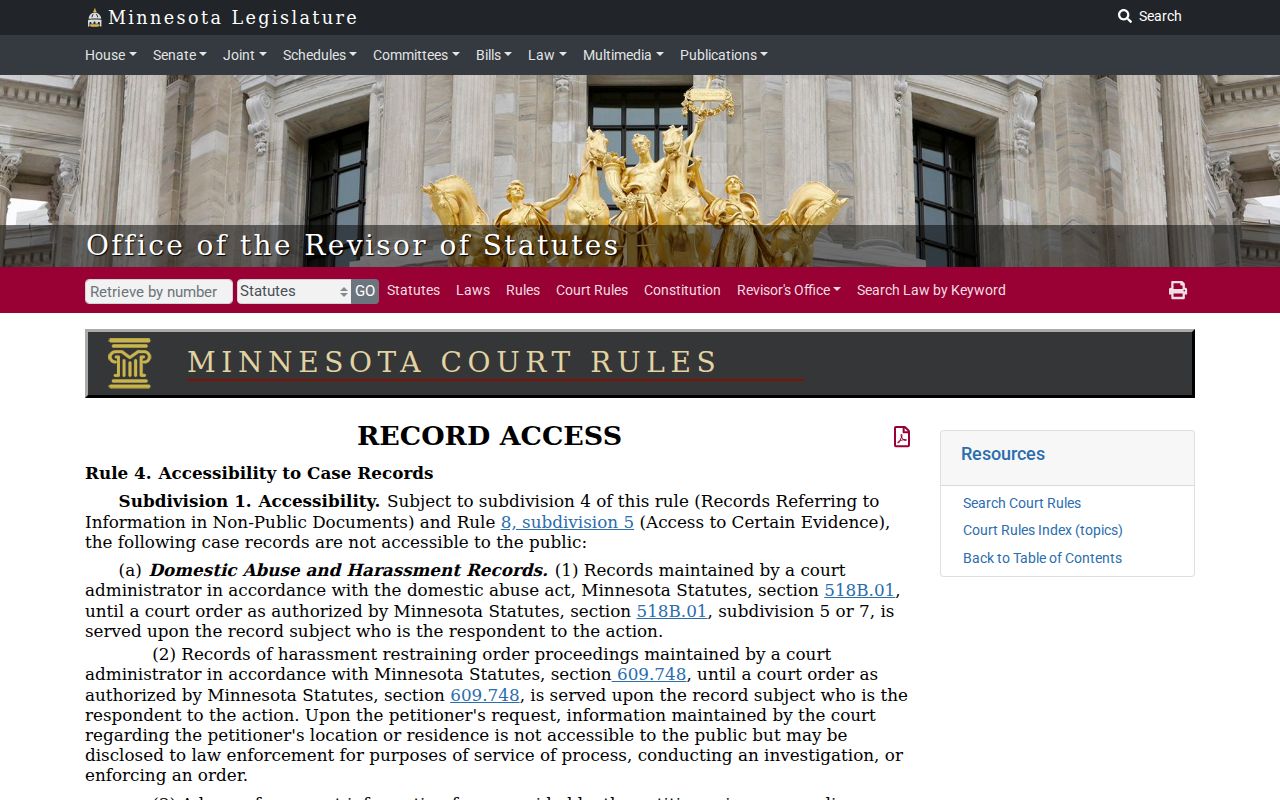
A named party or authorized person can ask Court Administration what identity, form, or order a restricted record requires. Expungement is a statutory process. It is not a reason to assume every historical reference is gone.
Olmsted Criminal Document Routes
Once you locate an Olmsted County criminal case, Document Search takes the case number. It then returns available public filings. Olmsted County MCRO downloads are free. They are not certified, though. For a certification level, or for a public document outside remote access, go through Olmsted County Court Administration. That office handles requests at the counter or by mail. If a record is confidential or sealed, name the document and the claimed authority. Keep sensitive details out of an unsecured request.
For a hearing question, MCRO Hearing Search and the official daily calendar help. Still, the criminal scheduling lines remain the best source for a current confirmation. For a search across a name or known case number, the countywide Olmsted County Case Lookup route runs on the same MCRO system. Its available filters narrow the results.